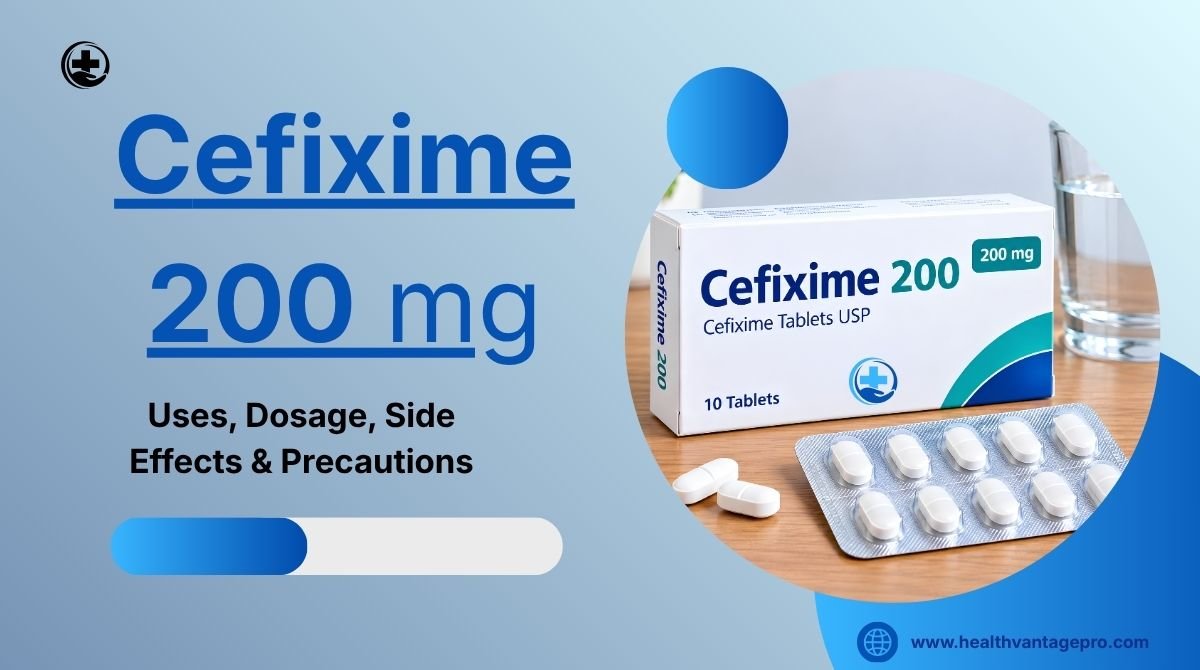
Cefixime 200 belongs to the third generation of cephalosporins, a family of antibiotics that are taken orally. It is an antibiotic made with 200mg of the drug cefixime and is used to treat some bacterial infections caused by bacteria that are sensitive to the antibiotic. It can be used by doctors for infections of respiratory, urinary, ear, throat and other areas of the body. Cefixime works by blocking the growth of bacteria by preventing the synthesis of the cell wall of susceptible bacteria. Does not treat viral diseases like influenza and other flu. This article will provide complete information about Cefixime 200 Tablet.
Source: Mayo Clinic; DrugBank
What Is Cefixime 200?
Cefixime 200 is a medicine that contains the active substance, cefixime, which is a third-generation cephalosporin antibiotic taken by mouth. It comes in various trade names and is also sold generically in various parts of the world and by different manufacturers.
Source: Mayo Clinic
Cefixime comes from a group of antimicrobial medicines that is used to treat an infection caused by bacteria that are sensitive to the medicine. It is active against a number of Gram-positive and Gram-negative bacteria. Depending on the bacteria, the infection and the antibiotic resistance, the effectiveness will vary.
Source: DrugBank
Cefixime may be used for adults and children if an appropriate formulation and dose are available. Cefixime is usually administered as an oral suspension for younger children to enable dosage based on body weight.
Source: FDA Prescribing Information
A 200 mg tablet is not necessarily appropriate for all infections. The duration, dose and frequency of treatment will depend on the infection, age, weight, kidney function and local prescribing guidelines.
Source: Mayo Clinic; Drugs.com
How Cefixime 200 Works?
Cefixime is a member of the beta-lactams antibiotic group. It inhibits the growth of sensitive bacteria before they are able to form a strong and effective cell wall. Peptidoglycan is present in the walls of bacteria. This helps the bacteria to keep their shape and shield them from the environment. Some enzymes within bacteria are responsible for the assembly and cross-linking of this material of the cell wall and are called penicillin-binding proteins or PBPs.
Source: DrugBank
These PBPs bind to cefixime, blocking the last steps of the synthesis of the bacterial cell wall. This weakens and makes the cell wall unstable. Eventually, susceptible bacterial cells can rupture and die. Peptidoglycan cell walls are not found in human cells. This difference enables cefixime to attack structures not found in human cells.
Source: Drugs.com Prescribing Info; DrugBank
Cefixime is active against a variety of organisms including some Streptococcus pneumoniae, Streptococcus pyogenes, Haemophilus influenzae, Moraxella catarrhalis, Escherichia coli, Proteus mirabilis and Klebsiella species.
But, cefixime is not effective against all kinds of bacteria. It is not reliable for activity against Gram-positive organisms like MRSA, Pseudomonas aeruginosa, Enterococcus and many anaerobic bacteria. So, the choice of cefixime must take into account the cause suspected or confirmed to be bacterial.
Source: DrugBank
Cefixime 200 Uses and Indications
Cefixime 200 is used for treating some types of bacterial infections when the bacteria that cause the infections are sensitive to cefixime. The following can be common uses:
● Upper respiratory tract infections: Cefixime can be used to treat some types of bacterial throat infection, tonsillitis and middle ear infection. Information on its use for sinus infections is based on individual clinical circumstances and local recommendations.
● Lower respiratory infections: It may be given for selected bacterial lower respiratory infections such as acute bronchitis or exacerbation of chronic bronchitis when bacterial organisms that are sensitive to it are present.
● Urinary tract infections: Cefixime is suitable for some uncomplicated urinary tract infections due to susceptible bacteria (e.g. E. coli, Proteus mirabilis).
● Gonorrhea: Cefixime has been used in uncomplicated gonorrhea, but treatment recommendations have often been updated in many countries due to the development of resistance. Treatment should be based on local guidelines.
● Other infections: Cefixime may be considered for enteric fever and other bacterial diseases in some circumstances, where susceptibility and clinical circumstances are favourable.
Cefixime is ineffective against viruses. Most colds, influenza, viral sore throat and many viral stomach infections do not get better with antibiotics. Antibiotic choices should be based on the probable organism, location of the infection, antibiotic sensitivity and patient-specific considerations. Laboratory culture and antibiotic susceptibility testing may be helpful to direct treatment when appropriate.
Source: Mayo Clinic; FDA Prescribing Information
Dosage and Administration of Cefixime 200
The recommended dose of cefixime will vary according to the patient age, weight, kidney function, type of infection, severity of infection and the country-specific prescribing information. Patients should always take the dose prescribed by their doctor and should not change the dose themselves.
Source: Mayo Clinic
Adult and adolescent doses are generally:
The total daily dose of cefixime is usually 400 mg per day, given either as a single dose or split into two doses. Once or twice daily, depending on the type of infection, a 200 mg tablet can be taken as prescribed by the doctor. The length of the treatment period varies from 7 days to 14 days, depending on the medical condition. Treatment may be just a few days for some infections and longer for others. For instance, with streptococcal infections, treatment is required for at least 10 days in order to completely eliminate the bacteria and reduce the risk of complications.
Source: FDA Prescribing Information; Mayo Clinic
Pediatric Dosing
Children are usually dosed with cefixime based on their body weight. Oral suspension may be preferred as it enables more accurate dosing based on weight. Usual pediatric dosage is approximately 8 mg/kg/day, either single or split doses, depending on the infection and current recommendations.
Source: DailyMed / FDA Label
Renal Impairment
Cefixime is excreted mainly in the urine. Dosage adjustments or changes in dose frequency may be necessary for persons with substantial renal impairment. Kidney disease patients should inform their physician before using the medication, Cefixime.
Source: Drugs.com Prescribing Info
Administration Tips
Follow the instructions for taking cefixime.
● Usually it can be administered with or without food.
● Give every dose at about the correct time.
● Swallow tablets with sufficient water.
● Never discontinue treatment without the advice of your health care provider.
● If missed, take a dose as soon as possible except if close to the next dose. Don’t double dose.
Source: Mayo Clinic
Absorption can be variable and food could have a slight effect depending on the formulation. Use the directions provided with your product.
Source: FDA Prescribing Information
Steps to Take Cefixime 200
● Consult a doctor: Ensure that the infection is bacterial and cefixime is right for you.
● Look at the prescription: Adhere to the dosage and strength prescribed by your doctor. Never administer the dose in any way.
● Take the tablet: Swallow Cefixime 200 with water. Generally taken with or without food.
● Take medicines on a regular schedule: Always take medicine on the same schedule as recommended to keep proper levels in your body.
● Follow the course of treatment as prescribed: Take medication as directed by your health care provider, even if you feel better.
● In case a dose is missed: Take the missed dose when forgotten, except if it is almost time for the next dose. Don’t take two doses at once.
● Watch for side effects: Diarrhea, nausea, stomach discomfort or loose stools may occur. If diarrhea is severe, breathlessness, facial swelling or serious skin reaction, get medical help.
● Proper storage: Store as directed, in the original container, in a cool, dry place and out of reach of children.
Source: Mayo Clinic
Never self medicate with Cefixime 200 or use old medicines.
Cefixime 200 Side Effects
Cefixime is generally well tolerated by most people, although it may have side effects, like other medicines. Digestive side effects are some of the most common ones.
Source: Mayo Clinic
The side effects are:
● This could be expressed as diarrhea or loose stools.
● Nausea
● Stomach discomfort
● Abdominal pain
● Indigestion
● Gas
● Vomiting
Source: Mayo Clinic; Drugs.com Prescribing Info
The following are some of the other side effects that have been reported, but are not seen as often:
● Headache
● Dizziness
● Skin rash
● Itching
Source: Mayo Clinic
There are rare but serious reactions, such as:
● Severe allergic reactions
● Facial swelling, lips, tongue or throat.
● Difficulty breathing
● Extensive and/or intense skin reactions
● Severe persistent diarrhea
● Blood abnormalities
● Inflammation of the liver or jaundice (yellowing of the skin)
● Kidney-related reactions
Source: FDA Prescribing Information; Mayo Clinic
Clostridioides difficile infection may be associated with severe diarrhea in persons who are taking antibiotics, or after antibiotic treatment. If diarrhea is bloody, severe, or accompanied by fever or serious abdominal pain seek medical attention.
Source: FDA Prescribing Information
If anyone experiences any of the following symptoms, they should seek immediate medical help as they may have developed difficulty breathing, swelling of the face and throat and severe skin reactions.
Source: Mayo Clinic
Safety, Warnings, and Warnings About Interactions
Cefixime should not be used by those who have had a serious allergic reaction to cefixime or another cephalosporin antibiotic or to any ingredient in the formulation.
Source: FDA Prescribing Information
Individuals who have had a serious allergic reaction to penicillin or other beta-lactam antibiotics should inform their physician before taking cefixime as there is cross-allergy.
Source: FDA Prescribing Information
Important Precautions
● Kidney disease: May need dose adjustment.
● Previous antibiotic-associated colitis: Inform your doctor if you have had severe diarrhea from antibiotics in the past.
● Previous allergies: List previous drug or penicillin allergies.
● Pregnancy: Consult a health care professional before taking cefixime during pregnancy.
● Breastfeeding: A health care provider can decide if cefixime should be used if a woman is breastfeeding.
● Older people: Kidney function and other medicines may need to be taken into account.
● Children: Pediatric doses should be based on the age, weight, formulation and type of infection.
Source: Mayo Clinic
Drug Interactions
Cefixime may interact with some medications. Probenecid, for instance, may lead to higher levels of cefixime by decreasing its elimination. Some patients taking medicines like warfarin may also have increased effects of these medicines when taking cephalosporin antibiotics, which may affect blood tests used to check if the medicine is working properly.
Source: Medscape; Mayo Clinic
Additionally, Cefixime may interfere with some laboratory tests, such as some urine glucose tests, and the Coombs test.
Source: FDA Prescribing Information
Inform your doctor or pharmacist of any prescription medicines, over-the-counter medicines, vitamins or supplements that you are currently taking.
Source: Mayo Clinic
Conclusion
Cefixime 200 belongs to a group of medications known as a third-generation cephalosporin antibiotic. It is used for the treatment of selected bacterial infections caused by bacteria that are sensitive to this antibiotic. It acts by interfering with the growth of bacteria cell walls, and may be used when there is an infection with bacteria in the respiratory, urinary, ear, throat and other systems.
Source: DrugBank; Mayo Clinic
The recommended dose and length of treatment is based on the type of infection, age, weight, kidney function and local medical guidelines. Not everyone is to receive a 200 mg tablet, and not all infections are to be treated with 200 mg tablet, and therefore same should be consumed as per the guidance of a healthcare practitioner.
Source: FDA Prescribing Information
FAQ’S
Good treatment of bacterial infection can begin to show improvement in symptoms within a few days. The treatment depends on the infection and person however. Never increase the dose or discontinue its use because of a change in symptoms.
No there is no well known direct alcohol interaction that is a universal contraindication to using cefixime. But alcohol can exacerbate symptoms like stomach discomfort, nausea or dizziness. It will be easier to stay away from alcohol during the recovery process after an infection.
Cefixime may be taken with or without food. Follow instructions for each formulation.
If you miss a dose, take it when you remember, unless it is close to the time for your next dose. NEVER take a “double up” dose to make up for a missed dose.
Store the tablets at room temperature, out of direct light and heat, in their original pack. Put all medicines out of the reach of children.
No. The common cold and influenza typically are viral infections, whereas cefixime is an antibiotic used to treat bacterial infections that are susceptible to the antibiotic.
Also Read
Magnesium Glycinate Guide: Benefits, Dosage, and Side Effects Explained
Disclaimer: This article is for general informational purposes only and is not a substitute for professional medical advice, diagnosis or treatment. It is not intended to replace consultation with a qualified doctor or pharmacist. Always consult a licensed healthcare provider regarding any medical condition, before starting, stopping or changing any medication, and before relying on any information in this article. Never self-medicate. Do not disregard or delay seeking professional medical advice because of something you have read here. In a medical emergency, contact your local emergency services immediately.